
Dual-Target Stabilization, Evidence-Based Optimization: Immune Deviation and Clinical Strategies in Biologic Therapy for Psoriasis
This conference review summarizes the mechanisms, risks, and clinical considerations discussed by Prof. Hongxiang Chen.
Introduction
Psoriasis is a chronic inflammatory systemic disease affecting approximately 125 million people worldwide, imposing a heavy disease burden. Biologics have become first-line therapy for moderate-to-severe psoriasis; however, treatment may disrupt immune homeostasis, leading to "immune deviation" and provoking paradoxical reactions.
This article, based on the academic lecture Dual-Target Stabilization, Evidence-Based Optimization – Focus on Immune Deviation under Biologic Therapy for Psoriasis delivered by Professor Hongxiang Chen of Zhongnan Hospital, Wuhan University, systematically elaborates on the pathogenesis of psoriasis, the differential risks and mechanisms of immune deviation induced by biologics targeting distinct molecules, and emphasizes the unique value of ustekinumab as an upstream dual-target inhibitor in reducing immune deviation risk and as a rescue therapy, providing evidence-based guidance for optimal biologic selection in clinical practice.
1 Psoriasis: A Heavy Global Disease Burden
Psoriasis is not merely a skin disorder but a chronic inflammatory disease affecting multiple systems, with approximately 125 million patients globally and marked regional differences in burden. Regions with higher Socio-demographic Index (SDI) (e.g., Western Europe, North America) exhibit significantly higher prevalence and incidence than low-SDI areas (e.g., East Asia, sub-Saharan Africa). According to projections from the Global Burden of Disease (GBD 2021) database, global prevalence, incidence, and disability-adjusted life years (DALYs) for psoriasis will continue to rise from 2022 to 2036. In 2021, the total economic cost attributable to psoriasis reached approximately US$148.85 billion, including US$95.15 billion in healthcare expenditure and US$53.71 billion in productivity losses, underscoring a burden that cannot be overlooked.
2 Pathogenesis: T Cell Differentiation and Cytokine Networks
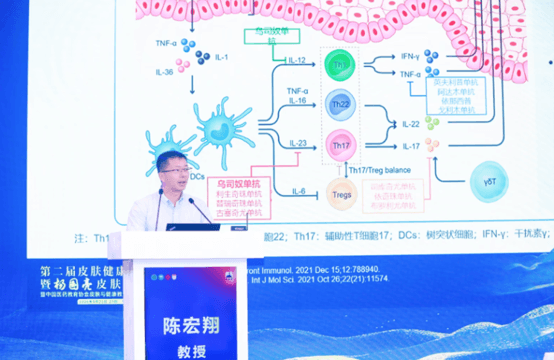
The core pathophysiological feature of psoriasis is aberrant T lymphocyte activation and infiltration into the epidermis or dermis. Research reveals that the IL-12/Th1 axis operates upstream in the pathogenesis of psoriasis, serving as the key switch for disease initiation, while the IL-23/Th17 axis is the central pathway bridging innate and adaptive immunity, closely associated with disease development and maintenance. IL-23 influences Th17 cell differentiation and activation, and through downstream effectors such as IL-17, drives keratinocyte proliferation, forming typical psoriatic plaques. Therefore, precise targeting of these key cytokines forms the theoretical basis for biologic therapy in psoriasis.
3 Biologics: Establishment as First-Line Therapy
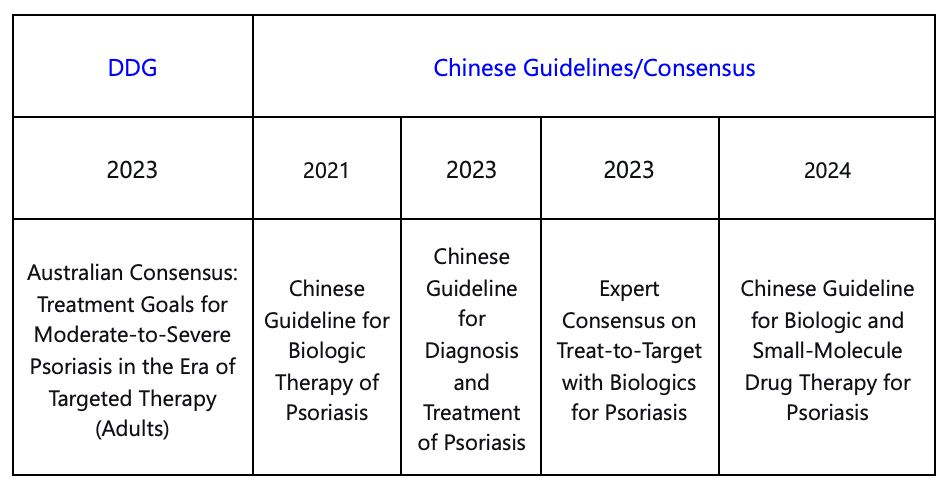
Based on well-defined pathogenesis, major domestic and international guidelines (including the Chinese guidelines on biologic agents, the European Dermatology Forum guidelines, etc.) consistently recommend biologics as first-line systemic treatment for moderate-to-severe psoriasis. Among them, ustekinumab (anti-IL-12/23 p40 subunit) offers both long-term efficacy and safety: 4-year follow-up shows a PASI 75 response rate of 90.9%, and at 8 years, 94.7% of patients achieved PASI ≤3, with significant improvement in Dermatology Life Quality Index (DLQI). In real-world studies, rates of serious infections, death, and major adverse cardiovascular events are extremely low.
4 Immune Deviation: A Hidden Challenge Beyond Efficacy
The immune system relies on delicate immune homeostasis. When therapeutic intervention disrupts this balance, leading to overactivation, underactivation, or aberrant immune responses, "immune deviation" occurs, which can provoke paradoxical reactions (previously often misnamed "immune drift"). Paradoxical skin reactions (eczematous, psoriasiform, lichenoid, fixed drug eruption, etc.) are typical manifestations. The mechanisms and risks differ among agents targeting various molecules:
TNF-α inhibitors: By neutralizing TNF-α, these agents increase plasmacytoid dendritic cell (pDC) production, upregulate IFN-α secretion, and consequently trigger excessive IL-23 production, inducing paradoxical psoriasis. They carry the highest risk of paradoxical skin reactions (accounting for 91.2% of cases), with diverse clinical presentations including plaque-type, palmoplantar pustular, and even lupus-like reactions. Etanercept and adalimumab are commonly implicated.
IL-17 inhibitors: Inhibition of IL-17A can indirectly increase pDC-derived IFN-α, triggering cascades similar to TNF inhibitors; simultaneously, compensatory elevation of other IL-17 subtypes or immune shift toward Th2/Th1 may lead to eczema, atopic dermatitis‑like lesions, alopecia areata, or palmoplantar pustulosis. Among paradoxical eczema cases, 72.55% are induced by IL-17A inhibitors, with significantly higher risk in patients with a history of atopic dermatitis, allergic rhinoconjunctivitis, eosinophilia, or elevated IgE (prior AD history HR = 12.40). Furthermore, IL-17 inhibitors can induce or exacerbate inflammatory bowel disease (IBD), as they affect intestinal mucosal defense. Secukinumab and ixekizumab are commonly involved.
IL-12/23 inhibitor (ustekinumab): Carries the lowest risk of paradoxical skin reactions (2.4%), with an adjusted incidence rate of only 0.80 per 100,000 person‑years, and does not increase IBD risk.

5 Ustekinumab: Upstream Dual-Target, Low Deviation Risk
Ustekinumab targets the shared p40 subunit of IL-12 and IL-23, achieving dual‑pathway regulation of the core pathogenic axis in psoriasis. Acting upstream of the Th17 axis, it suppresses pathogenic Th17 differentiation and reduces pathogenic IL-17 secretion, while preserving physiological IL-17 derived from γδT cells, ILC3s, and other sources in barrier tissues such as the gut, thereby maintaining antifungal and anti‑extracellular bacterial defense. Moreover, ustekinumab does not inhibit acute‑phase inflammatory cytokines such as TNF-α, IL-6, or IL-1β, and thus is unlikely to broadly disrupt immune homeostasis or induce Th1/Th2 deviation.
6 Clinical Translation: From "Induction" to "Rescue"
Accumulating clinical evidence supports ustekinumab as a rescue therapy for paradoxical reactions induced by other biologics:
For TNF‑α inhibitor‑induced paradoxical IBD: A patient with psoriasis developed new‑onset ulcerative colitis after 12 months of adalimumab therapy; after switching to ustekinumab, both psoriasis (PASI 0.5) and colitis achieved complete remission at 24 months.
For TNF‑α inhibitor‑induced paradoxical skin reactions: A retrospective study of 26 IBD patients showed that ustekinumab was effective against TNF‑α inhibitor‑induced eczematous rashes, psoriasiform lesions, and alopecia areata, while also improving gastrointestinal symptoms.
For IL‑17 inhibitor‑induced paradoxical palmoplantar pustulosis: Case reports describe two psoriasis patients who developed palmoplantar pustulosis after IL‑17A inhibitor therapy; after switching to ustekinumab, pustules completely resolved and psoriasis was well controlled.
For IL‑17 inhibitor‑induced pyoderma gangrenosum (PG): One psoriasis patient developed PG ulcers after secukinumab treatment, with poor response to cyclosporine; after two doses of ustekinumab, both PG ulcers and psoriasis markedly improved.
For IL‑17 inhibitor‑induced paradoxical IBD: A patient who developed new‑onset Crohn’s disease during ixekizumab treatment was switched to ustekinumab; at 11 months, endoscopic ileal ulcers completely disappeared, anal fistula healed, and pathology showed only mild chronic inflammation, with sustained psoriasis remission.
7 Summary and Perspectives
Psoriasis treatment has fully entered the biologic era, but clinicians must remain vigilant about potential immune deviation and consequent paradoxical reactions while pursuing superior efficacy. The risks and mechanisms of immune deviation differ significantly among agents targeting distinct molecules: TNF‑α inhibitors carry the highest risk, IL‑17 inhibitors are intermediate with predominant Th2‑type deviation (eczema) and IBD, while the IL‑12/23 inhibitor (ustekinumab), owing to its upstream dual‑target regulation, confers the lowest risk and can effectively rescue a variety of paradoxical reactions induced by TNF‑α or IL‑17 inhibitors.
Therefore, in the comprehensive management of biologic therapy, clinicians should integrate efficacy, long‑term safety, and impact on immune homeostasis, favoring regimens with upstream targeting, precise modulation, and low deviation risk, so as to achieve long‑term, stable, and safe control of psoriasis – truly embodying the modern therapeutic concept of "dual‑target stabilization, evidence‑based optimization."
Expert Profiles

Professor Hongxiang Chen
Zhongnan Hospital, Wuhan University
Specializes covers immune‑mediated dermatoses (e.g., psoriasis, lupus erythematosus), cosmetic skin concerns (e.g., acne, corticosteroid‑dependent dermatitis), and sexually transmitted diseases (e.g., HIV/AIDS, syphilis).
He also has extensive experience in the diagnosis and management of atopic dermatitis, skin tumors, and other complex and severe dermatological conditions.