
Professor Baohui Han: From Targeted Innovation to Immunological Breakthrough – Unlocking New Progress in Lung Cancer Diagnosis and Treatment | 2026 BOC
At BOC2026, Prof. Han Baohui shares insights on the future of NSCLC, SCLC, and precision oncology.
Editor’s Note: At the 2026 Annual Symposium on New Progress in Clinical Oncology in China (BOC) & Best of CSCO 2026 China, held in Hohhot, Inner Mongolia from July 3 to 4, 2026, FOCUS Clinical Scientists invited Professor Han Baohui from Shanghai Chest Hospital, Shanghai Jiao Tong University School of Medicine, for an in-depth interview. Their discussion covered milestone advances in targeted therapy for non-small cell lung cancer, therapeutic breakthroughs and full-course management strategies for small cell lung cancer, the mechanism and clinical value of anti-angiogenesis combination regimens, as well as the four-decade evolution and future prospects of lung cancer diagnosis and treatment in China.
FOCUS Clinical Scientists: In recent years, targeted therapy for non-small cell lung cancer (NSCLC) has developed rapidly, covering targets from EGFR to ALK, ROS1, KRAS and more. In your opinion, what is the most groundbreaking progress?
Professor Han Baohui:Targeted therapy for NSCLC stands as a milestone in the development of precision medicine. Over 20 years ago, the launch of gefitinib, the first targeted agent, established the classic paradigm of precision treatment. To date, more than 10 targets in NSCLC have corresponding precision therapies, with agents iterating from first-generation to third-generation formulations. Treatment modalities have also shifted from monotherapy to combination therapy, driving the transition of NSCLC from short-term survival to long-term tumor-bearing survival and chronic disease management.
Groundbreaking advances across key pathways are summarized as follows:
EGFR pathway: The core future direction is multifunctional combination strategies, including targeted therapy plus chemotherapy, bispecific antibodies, or antibody-drug conjugates (ADCs), which represent a key exploratory direction to advance the chronic disease management of NSCLC. Multiple clinical studies such as the FLAURA2 and MARIPOSA trials, as well as explorations on ADC-based combinations, will continue to provide evidence-based support and reshape clinical practice.
ALK pathway: The third-generation ALK-TKI lorlatinib has set a new benchmark for long-term survival, with progression-free survival (PFS) benefit exceeding 7 years. ALK-mutant NSCLC has taken the lead in entering the era of chronic disease management and potential cure, making it the driver gene subtype closest to chronic disease control and even clinical cure.
ROS1 pathway: As a classic targeted agent for this target, taletrectinib has shown superior efficacy over previous-generation therapies, delivering improved treatment benefits to patients with ROS1-positive NSCLC.
RET pathway: Lenvatinib has set a new efficacy record for this target, with a short-term response rate of 87% in previously treated NSCLC patients and a median progression-free survival (mPFS) of over 27 months.
Overall, targeted therapy for NSCLC is advancing steadily toward greater specialization, precision and combination-based strategies, serving as the core pillar for achieving the goal of chronic disease management in advanced NSCLC.
FOCUS Clinical Scientists: Small cell lung cancer (SCLC) has long been regarded as a "hard nut to crack". What changes have been brought by the application of immunotherapy and novel chemotherapeutic agents in recent years? What is your view on the full-course management of extensive-stage SCLC (ES-SCLC)?
Professor Han Baohui:SCLC is a highly malignant tumor associated with smoking, originating from the central large airways of the lung and characterized by early hematogenous and lymphatic metastasis. In early years, chemotherapy was the mainstay of treatment. Although SCLC is highly sensitive to chemoradiotherapy, patients with advanced disease usually relapse around 6 months after treatment, with very poor outcomes post-relapse — a long-standing clinical challenge.
In recent years, multidimensional breakthroughs have been achieved in SCLC diagnosis and treatment, gradually reshaping the full-course management landscape:
Immuno-chemotherapy breaks the survival bottleneck: The combination of immunotherapy and chemotherapy has for the first time extended the median overall survival (mOS) of advanced SCLC beyond 1 year, breaking the efficacy ceiling of chemotherapy alone.
Upgraded second-line treatment standard: The advent of lurbinectedin has raised the efficacy bar for second-line SCLC treatment, providing a more effective option for relapsed patients.
Four-drug combination sets new survival record: The four-drug regimen consisting of anlotinib (a multi-target anti-angiogenic agent), immunotherapy and EC chemotherapy has further improved outcomes, with mOS approaching 20 months, which has directly changed clinical practice.
Novel cellular immunotherapy emerges: DLL3-targeting T-cell engagers represent the latest therapeutic breakthrough, with a second-line mPFS of approximately 10 months, and their clinical development is now advancing into the first-line setting.
Looking ahead, with the research and launch of more ADCs and bispecific antibodies, the therapeutic armamentarium for SCLC will continue to expand, and full-course management strategies will be continuously optimized to bring more survival benefits to patients.
FOCUS Clinical Scientists: You have conducted in-depth research on the combination of anti-angiogenesis therapy and targeted therapy (the "A+T" regimen). What are the advantages of this combination strategy and its applicable populations?
Professor Han Baohui:The theory of tumor angiogenesis has a history of over 50 years, first proposed by Professor Judah Folkman in the 1970s. The development of anti-angiogenesis therapy has roughly gone through two phases:
Initial phase: The core concept was to cut off tumor blood supply, reduce nutrient delivery and metastatic pathways to exert anti-tumor effects. This phase achieved certain efficacy, but the benefit was transient and failed to ultimately improve patients' overall survival.
Combination therapy phase: With deepening understanding of the tumor microenvironment, researchers found that tumors harbor complex immunoregulatory mechanisms in addition to neovascularization, ushering in a new era of anti-angiogenesis combined with immunotherapy. The core mechanism of this strategy is to block neovascularization and inhibit VEGF expression, while activating immune cell function and attenuating the activity of suppressor T cells, thereby achieving synergistic anti-tumor effects. On this basis, the three-drug regimen of anti-angiogenesis + immunotherapy + chemotherapy has also yielded definite clinical efficacy, and is expected to continue playing a significant role in the future.
FOCUS Clinical Scientists: With decades of dedication in the field of lung cancer — from the chemotherapy era to the targeted therapy era and then to the immunotherapy era — what is your most profound insight into the improvement of lung cancer diagnosis and treatment in China?
Professor Han Baohui:
With over 40 years of clinical practice in lung cancer diagnosis and treatment, my most profound feeling is that all-round leapfrog development has taken place in this field. The goal of "curing early-stage lung cancer and turning advanced lung cancer into a chronic disease" has been initially achieved.
In terms of diagnosis and early screening, the implementation of proactive intervention and high-risk population screening has delivered remarkable results. A growing number of patients with stage IA and IB operable early-stage lung cancer have been identified, and the proportion of early-stage cases among surgical patients in tertiary hospitals nationwide has increased significantly. Taking Shanghai Chest Hospital as an example, patients with stage IA and IB disease account for approximately 75%. Early diagnosis and early treatment are the core pathways to curing lung cancer, and currently the 5-year survival rate of stage IA patients exceeds 95%.
In terms of advanced treatment, the clinical paradigm has undergone three iterations with continuously improving efficacy:
In the chemotherapy era, patient survival was very limited. In the targeted therapy era, with agent iteration from first to third generation and treatment shifting from monotherapy to combination therapy, the PFS of patients with positive driver genes has increased from less than 1 year to over 7 years at maximum, truly realizing chronic disease management.
For patients with negative driver genes, the application of immunotherapy, bispecific antibodies, ADCs and other combination regimens has extended PFS beyond 1 year, and the goal of over 2 years is currently being pursued.
Overall, China's early diagnosis level and treatment capacity for lung cancer are continuously improving, and clinical needs are increasingly being met. The future holds great promise for both the cure of early-stage lung cancer and the progression of advanced lung cancer toward potential cure.
Expert Profiles
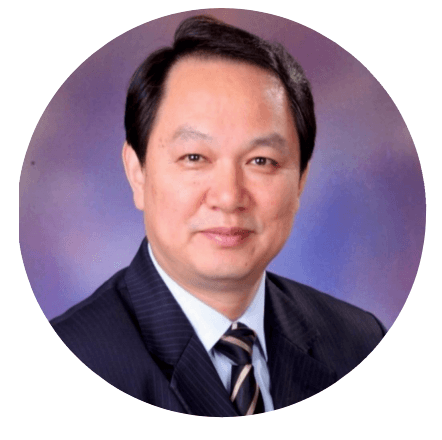
Professor Baohui Han
Shanghai Chest Hospital, Shanghai Jiao Tong University School of Medicine
Specializes in the diagnosis and multidisciplinary treatment of lung cancer, with expertise in targeted therapy, immunotherapy and clinical research of novel anti-cancer agents.