
Dr. Haiquan Chen: Perioperative "De-escalation" Strategies and Lymph Node Dissection Approaches for Resectable Squamous Cell Lung Cancer | WCLC 2026
At WCLC26, we spoke with Prof. Haiquan Chen of Fudan University Shanghai Cancer Center about optimizing perioperative treatment and surgical strategies for lung cancer.
Editor's Note: The 2026 World Conference on Lung Cancer (WCLC 2026), hosted by the International Association for the Study of Lung Cancer (IASLC), was held in Seoul, South Korea, from September 12 to 15, 2026. FOCUS Clinical Scientists reported from the conference venue, bringing frontline academic coverage. We specially invited Dr. Haiquan Chen from Fudan University Shanghai Cancer Center to share in-depth insights on key issues including resectability assessment for stage III N2 non-small cell lung cancer, perioperative treatment pathway selection, perioperative "de-escalation" strategies for resectable squamous cell lung cancer, and lymph node dissection approaches.
FOCUS Clinical Scientists: In recent years, "resectability" has been shifting toward a multidisciplinary comprehensive assessment integrating tumor biology and the benefits of perioperative systemic therapy. In your clinical practice, how do you define "borderline resectable" stage III NSCLC, especially the gray zone between single-station non-bulky N2 and multi-station/bulky N2? What decision variables do you value most in MDT discussions?
Dr. Haiquan Chen: Whether a tumor is resectable or unresectable actually has no very clear consensus globally. What one side considers unresectable, the other side may consider resectable; what one side considers resectable, the other side may consider unresectable. In the previously published "The American Association for Thoracic Surgery (AATS) Expert Consensus Document: Evaluation and management of N2+ non-small cell lung cancer (NSCLC)," the controversy over resectable versus unresectable was the greatest. These patients indeed face severe challenges worldwide: can surgery deemed feasible achieve R0 resection? For those deemed unresectable, is it certain that they cannot be resected? These questions remain unresolved, and therefore the controversy remains substantial. For us, we cannot take great risks with such patients because the evidence on resectable versus unresectable is still insufficient. For unresectable patients, those negative for driver mutations may receive concurrent chemoradiotherapy followed by immune consolidation therapy, while those positive for driver mutations have other strategies. Therefore, clearly defining resectable versus unresectable is very important. Another issue is whether conversion is possible: whether patients deemed unresectable can be converted, and how many can be converted, still lacks prospective studies. These are severe challenges we will face going forward, and more clinical studies should be designed to answer these questions.
FOCUS Clinical Scientists: For driver-gene-negative stage III N2 patients, perioperative chemo-IO and definitive concurrent chemoradiotherapy followed by immune consolidation are two parallel standard pathways. How do you choose between surgery and non-surgery in MDT decision-making? In the future, could precise stratification be achieved based on ctDNA clearance rate or immune microenvironment characteristics?
Dr. Haiquan Chen: This is also a question without a clear answer. For resectable patients, whether to use chemoradiotherapy followed by immune consolidation or neoadjuvant therapy followed by surgery and then adjuvant therapy postoperatively remains undetermined, and there is a lack of prospective studies providing more evidence to answer these questions. Moreover, these patients are highly heterogeneous. The era in which one treatment approach applies to all patients has passed. Therefore, more individualized prospective studies are needed to subdivide patients and then manage them differently according to different situations. This requires a large number of clinical studies. The era in which a single clinical study could answer all questions is also gone forever. Therefore, given the issue of heterogeneity, the work we need to do going forward is to subdivide this patient population; after subdivision, find the appropriate approach for each category of patients. Currently, I cannot give you more answers.
FOCUS Clinical Scientists: Your team's 4-cycle perioperative "de-escalation" regimen for resectable squamous cell lung cancer published in JITC has attracted much attention. Currently, there is still a lack of unified standards for the number of cycles of neoadjuvant immunotherapy combined with chemotherapy (2–4 cycles) and the duration of postoperative adjuvant immunotherapy. Which patients should be "de-escalated" and which should be "escalated"? Does ctDNA have the potential to guide "escalation/de-escalation" stratification?
Dr. Haiquan Chen: In recent years, perioperative treatment mainly adopted the "sandwich" approach, namely preoperative neoadjuvant therapy, surgery, and then postoperative adjuvant therapy; while the CheckMate 816 study adopted neoadjuvant therapy followed by surgery. Which approach is better currently remains undetermined. In 2024, we proposed that phase IIb controlled studies should be conducted, and subsequently the U.S. Food and Drug Administration (FDA) also required this. One point needs to be clarified here: is it neoadjuvant therapy or surgery, or adjuvant therapy? Previous studies showed that after receiving neoadjuvant therapy, approximately 15%–25% of patients cannot undergo surgery for various reasons, and whether direct surgery could benefit such patients remains unclear. Therefore, the questions that existing clinical studies can answer are still very limited. Our research is more refined, focusing on squamous cell carcinoma. We conducted a single-arm clinical study and found that squamous cell carcinoma responds well to a simplified perioperative regimen of serplulimab combined with taxane plus carboplatin chemotherapy, with a pathological complete response (pCR) rate exceeding 50%. On this basis, we then conducted a prospective randomized controlled phase II study, planning to enroll 116 patients, and 80 have been enrolled so far. Based on enrollment and existing data, its pCR rate has further improved compared with the past, also reaching over 50%; the randomized comparison between two cycles and three cycles has not shown significant differences. We hope to provide answers by the end of this year. Although this is a phase II study, we will still clearly answer: which is superior, two cycles or three cycles? For this specific proportion of squamous NSCLC, how much benefit can neoadjuvant therapy bring? How many patients can achieve pCR? I think that although this is not a large phase III clinical study, more than 100 patients can still answer some questions.
FOCUS Clinical Scientists: The extent of lymph node involvement is a core determinant of resectability in stage III NSCLC. How is your team's selective dissection philosophy applied in stage III patients? After significant lymph node downstaging following neoadjuvant therapy, can the extent of dissection be adjusted accordingly? If imaging shows shrinkage but pathological microresidual disease may still exist, what role does intraoperative frozen section pathology play in decision-making?
Dr. Haiquan Chen: Lymph node dissection is indeed an important issue. On September 11, the expert committee for the 10th edition of TNM staging held a relevant meeting, with a subgroup specifically discussing optimal lymph node dissection strategies. In the past, for advanced lung cancer, lobectomy or segmentectomy combined with lymph node dissection was the standard treatment. However, in some early-stage patients, this is not the case. We conducted prospective phase II and phase III studies, and for such patients, it may be possible to omit lymph node dissection. If lymph nodes were originally positive, whether they have downstaged after neoadjuvant therapy, whether they have converted to negative or have only microresidual disease, and whether dissection is needed, currently cannot be answered and still requires more prospective studies.
In addition, during the TNM staging discussion, I also raised a question: among patients who previously underwent systematic lymph node dissection, those with positive nodes should indeed undergo dissection; but for patients in whom all nodes were negative after systematic dissection, whether dissection is actually harmful is something we do not know. Therefore, we want to observe whether the incidence of second primary lung cancer postoperatively increases in such patients, which is currently unclear. Even if an increase is observed, it would only be a retrospective finding lacking controls. Therefore, accurately determining lymph node staging, grading, and whether lymph node metastasis is positive or negative preoperatively is a key issue we need to address in future clinical practice. We now know that lymph nodes are not "enemies" but an important part of the body's immune system. If the lymphatic system has not been invaded by metastatic lymph nodes, we should preserve it. Some of our previous studies showed that the immune activity of non-metastatic lymph nodes remains strong, whereas the overall microenvironment of lymph nodes with metastasis is immunosuppressed and should be removed; but for non-metastatic lymph nodes, how to preserve them and how to accurately determine that they are indeed negative is very important. This will be one of the key areas of our future work.
Expert Profile
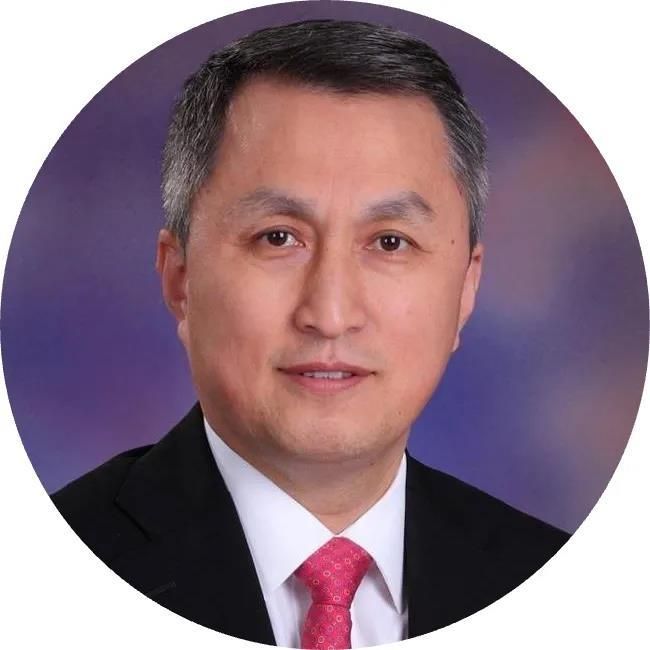
Dr. Haiquan Chen
Fudan University Shanghai Cancer Center
With extensive experience in clinical thoracic and cardiovascular surgery, he possesses comprehensive expertise in this field. He specializes in the early diagnosis of thoracic tumors, such as lung cancer and esophageal cancer, as well as their multidisciplinary comprehensive treatment, with a focus on minimally invasive surgery.