
Dr. Dawei Yang: Updates on Lung Cancer Screening Criteria and the Clinical Empowerment of AI Agents | WCLC 2026
At WCLC26, Dr. Dawei Yang from Zhongshan Hospital, Fudan University, examines the evolving criteria for identifying high-risk populations in China, emerging research on lung cancer screening in non-smokers, and how medical AI agents could advance early detection and clinical care.
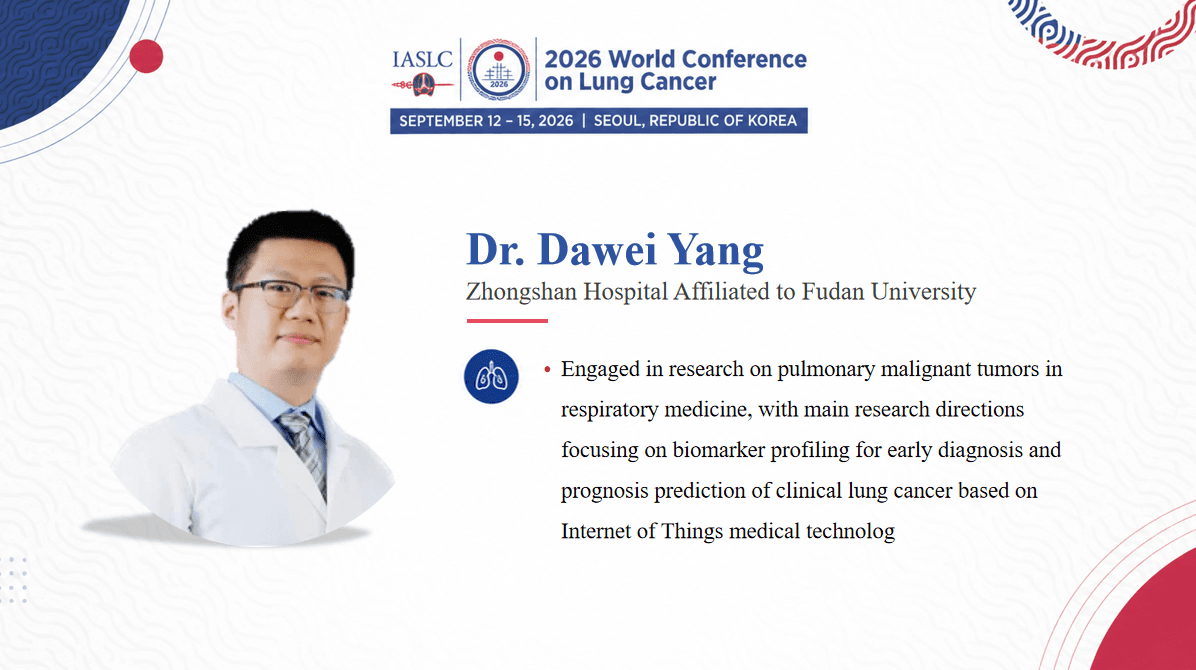
Editor's Note: The 2026 World Conference on Lung Cancer (WCLC 2026), hosted by the International Association for the Study of Lung Cancer (IASLC), was held in Seoul, South Korea, from September 12 to 15, 2026. FOCUS Clinical Scientists specially invited Dr. Dawei Yang from Zhongshan Hospital Affiliated to Fudan University to share his observations and reflections on the adjustment of domestic criteria for high-risk populations in lung cancer screening, research progress in screening non-smoking populations, and the current application status and future directions of medical AI agents in clinical diagnosis and treatment.
FOCUS Clinical Scientists: What are the current domestic criteria for high-risk populations in lung cancer screening? What major changes have occurred in recent years? In terms of lung cancer screening for non-smoking populations, what research progress is currently worth noting?
Dr. Dawei Yang: Regarding lung cancer screening criteria, guidelines and expert consensus from major domestic associations have undergone considerable adjustment in recent years. Dr. Bai Chunxue, under whom I studied, led experts from various disciplines of the China Lung Cancer Prevention and Control Alliance to update the "Chinese Expert Consensus on Internet of Things-Assisted Diagnosis and Treatment of Pulmonary Nodules" in 2025, lowering the age criterion for high-risk lung cancer populations from the international standard of 55 years to around 40 years. Regarding smoking criteria, a large global cohort study may be released in the near future. At this year's WCLC, the team of Dr. Yang Pan-Chyr from Taiwan reported the TALENT study, the world's first real-world study using low-dose CT screening in non-smoking populations. The study found that low-dose CT screening can achieve screening intensity comparable to that in smoking populations among non-smokers, but the final study endpoint did not reveal an impact on prognosis.
Globally, Dr. Martin Carl Tammemagi, a Canadian professor of statistical epidemiology on the IASLC Early Detection and Screening Committee, is about to release the Falcons study, which includes 22 non-traditional high-risk factors, including non-smoking, in a head-to-head study worldwide. Domestically, we are increasingly finding that some young white-collar workers discover signs of nodules through routine physical examinations. One major difference from abroad is that we do not have strict lung cancer screening cohort studies. Although the National Health Commission included a family history of lung cancer in first-degree relatives as a high-risk criterion in 2024, we believe that domestic experts will soon lead subgroup analyses or prospective real-world cohort studies targeting non-smoking populations.
As young physicians, the criterion we most hope to obtain is: how to determine in the future which patients need annual follow-up and which patients may not be suitable for inclusion in the annual follow-up screening cohort.
FOCUS Clinical Scientists: We noticed that this year's WCLC also featured a special session on AI agents. What is the current development status of domestic medical AI agents?
Dr. Dawei Yang: The biggest difference between AI agents and traditional large AI models may lie in their ability to decompose multiple tasks and their better adaptation to the clinical diagnosis and treatment environment. Clinicians have different roles in the disease diagnosis and treatment process: internists are responsible for diagnosis, surgeons and oncologists are responsible for treatment, and general practitioners or family physicians are responsible for postoperative rehabilitation training. Traditional large AI models can only address the judgment of a certain imaging parameter or the calculation of certain biomarker models; full-course management, however, requires future medical AI agents need to be evaluated in real-world clinical settings to determine their ability to assist clinical practice.
In China, although medical AI agents are not a new concept, the national level has gradually launched large-scale projects in areas such as data sources, regulatory oversight, data governance, and how clinicians should correctly use AI agents, including the recently announced pilot testing bases. Under the leadership of Party Secretary Gu Jianying, our hospital has also undertaken related work as a clinical research and translation base. Over the next 5 to 10 years, we hope to promote the implementation of more medical AI agents through strict clinical compliance review and pilot base testing. We pay particular attention to AI agents related to early-stage lung cancer and pulmonary nodules, hoping they can truly empower primary care physicians, assist clinical diagnosis and treatment, and achieve higher precision and better diagnostic and treatment standards.
Expert Profile
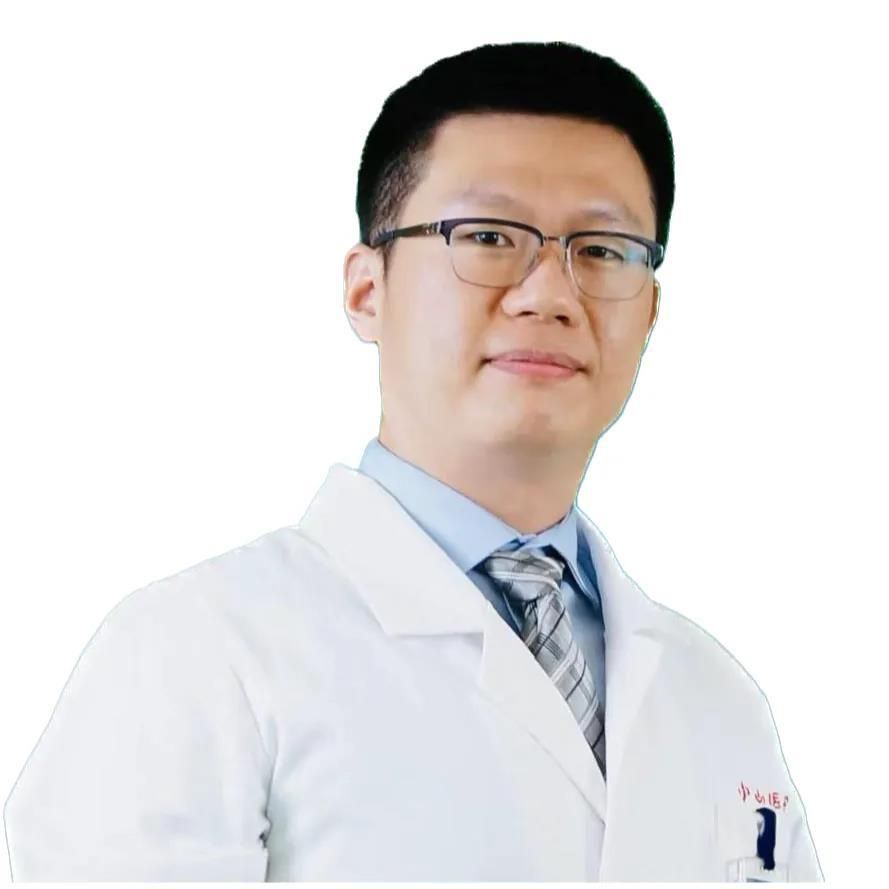
Dr. Dawei Yang
Zhongshan Hospital Affiliated to Fudan University
Engaged in research on pulmonary malignant tumors in respiratory medicine, with main research directions focusing on biomarker profiling for early diagnosis and prognosis prediction of clinical lung cancer based on Internet of Things medical technology.