
Dr. Wentao Fang: Letting Science Cross Boundaries and Bringing Greater Benefits to More Lung Cancer Patients | WCLC 2026
Dr. Wentao Fang explores how China’s advances in lung cancer research are shaping global progress, from innovative therapies to the evolving role of surgery. Discover how international collaboration can translate scientific breakthroughs into better outcomes for patients worldwide.
Editor's Note: From September 12 to 15, 2026, the 2026 World Conference on Lung Cancer (WCLC 2026), hosted by the International Association for the Study of Lung Cancer (IASLC), was held in Seoul, South Korea. FOCUS Clinical Scientists traveled to the conference site to bring frontline academic reports and specially invited Dr. Wentao Fang, President of WCLC 2026 and from Shanghai East Hospital Affiliated to Tongji University, to engage in an in-depth dialogue on topics including the innovative agenda of this year's conference under the theme "Science Without Boundaries," the international rise of lung cancer research in China, and the evolving role of surgery in the full-course management of lung cancer.
FOCUS Clinical Scientists: This year's conference achieved many breakthroughs in agenda setting and meeting format. As a member of the conference presidency, you were deeply involved in planning the agenda for this year's conference. First, could you share from a planner's perspective: what innovations in the agenda setting of this year's conference impressed you most? And which special sessions or segments would you particularly like to recommend to everyone?
Dr. Wentao Fang: The theme of this year's World Conference on Lung Cancer (WCLC) is "Science Without Boundaries." Over the past few days, participants have engaged in lively discussions around this theme, and the meaning of this slogan actually has multiple layers of significance.
First, from the perspective of conference format design, "without boundaries" means we hope that the excellent content and important information of WCLC will no longer be confined to the venue, Seoul, South Korea, or even Asia, but rather can be accessed by more colleagues who could not attend in person, and even by those outside the medical service and research fields who are interested in lung cancer (including patients and related staff), so that science can reach more people. As can be seen, starting this year, WCLC has launched online real-time streaming; as long as registration is completed, one can participate online in real time without traveling thousands of miles to the venue.
Second, the official language of international conferences is usually English, whether for abstract oral presentations, poster presentations, or discussions and exchanges, all are conducted in English. This WCLC introduced artificial intelligence (AI) real-time translation for the first time: not only are subtitles displayed at the venue, but participants can also select languages from various countries through earphones. For colleagues who are not proficient in English, this allows them to more conveniently access conference information, participate more actively in interactions, and more fully appreciate the rich academic exchange content of WCLC.
Furthermore, WCLC has never been merely an academic platform for releasing the latest research findings; it is also an important platform for interactive discussion of lung cancer-related medical information and a platform for medical education. From the content of this conference, it can be seen that the agenda included topics such as how to optimize lung cancer screening and prevention strategies through communication with government departments, and how countries can exchange and learn from each other's advanced experiences. These contents, starting from the level of prevention and screening, can truly drive the diagnosis and treatment of lung cancer to a higher level. In terms of practical application, the conference also set up numerous Hands-On Sessions and Workshops, allowing participants to experience the latest diagnostic and treatment technologies on site, including robotic surgery, the application of wearable devices in patient management, and the practice of AI in improving work efficiency and service capacity in daily diagnosis and treatment. These are all quite innovative formats this year. We also hope that clinical and research workers can better master these new technologies through this opportunity and continuously improve their daily clinical practice.
In summary, from these rich and diverse forms of exchange and interaction, as well as the new platforms provided by the conference, it can be seen that starting this year, WCLC has stepped onto a new level different from the past. We also look forward to making the conference even better in the future with more diverse and richer formats, so that every participant can gain more.
FOCUS Clinical Scientists: In recent years, the role of Chinese lung cancer research on the international academic stage has continued to rise. How do you view the transformation of Chinese research from "participant" to "leader"?
Dr. Wentao Fang: Judging from the results published at successive WCLC conferences, the participation of Chinese scholars has been increasing, and the number of research findings released has also grown year by year, reaching the highest level ever this year. This year, oral presentations by Chinese researchers exceeded 60, the highest in history, achieving breakthroughs not only in quantity but also in quality.
Particularly noteworthy is the "Late Breaking Abstract" (LBA), which the conference places great emphasis on, namely the latest and most important clinical research results. Among the 20 LBAs this year, nearly half were projects in which Chinese doctors or researchers served as principal investigators (PIs) or presenters, which is a quite striking proportion. Moreover, these included not only the commonly seen results of drug clinical studies but also the preliminary results of two large phase III clinical studies of perioperative surgical treatment, which were also officially released in LBA format this year.
This fully reflects WCLC's emphasis, as a multidisciplinary academic exchange platform, on improving the level of all professional fields in lung cancer treatment; it also shows that Chinese lung cancer-related researchers have begun to occupy an important position on the international stage and are gradually leading the direction of lung cancer research in various specialties. We also look forward to seeing more such excellent results in the future.
On the other hand, China's new drug research and development is continuously moving to the international forefront. From the LBAs at this conference, it can be seen that the results of new drug research and development for multiple domestically developed original drugs were announced. If these innovative drugs can be fully validated by clinical trial results in the future, they will not only benefit Chinese patients but also bring greater benefits to patients worldwide, which is exactly the outcome we hope to see.
It can be said that the reason Chinese lung cancer research has been able to achieve the leap from "following" to "running in parallel," and even "leading" in certain areas, is largely inseparable from the participation of all parties including clinical, research, and enterprise sectors, as well as the support of patients and their families. We hope this positive situation can continue.
FOCUS Clinical Scientists: With the increasing richness of lung cancer diagnosis and treatment methods, the positioning of surgery in full-course management is constantly changing. Looking ahead, how do you think the role of surgery will evolve? Which directions are most worthy of attention, and which breakthroughs are most likely to be achieved first?
Dr. Wentao Fang: This question is very important. The lung cancer we face clinically today, as well as the diagnostic and treatment technologies we use, are completely different from when I first entered the field two or three decades ago—one could say earth-shaking changes have occurred.
These changes first benefit from the continuous advancement of surgical techniques. Over the past two or three decades, the greatest progress in the surgical field has been minimally invasive surgery. Today's surgery is completely different from the past—not only have incisions changed, but thoracoscopy, robotics, mediastinoscopy, and other technologies have been applied successively, and the extent of resection has also been continuously reduced and adjusted; lymph node dissection has also moved from extended dissection to selective dissection, and in some cases, dissection is no longer even needed. Our goal has always been: to minimize trauma and impact on patients and improve their quality of life while ensuring radical oncological efficacy.
However, it should be pointed out that these changes largely stem from CT screening enabling earlier detection of lung cancer, and the survival benefits it brings far exceed the progress of surgical techniques or drug therapy. From an overall macro perspective, lung cancer screening can be said to have completely changed the landscape of lung cancer treatment. The disease composition of lung cancer patients undergoing surgical treatment today is vastly different from two or three decades ago, and this is also a direction we need to further strive toward in the future. At this WCLC, it can be seen that multiple academic sessions discussed how to do better in lung cancer screening: how to give more people access to screening opportunities, how to achieve more precise screening, and how to avoid overdiagnosis and overtreatment of problems found through screening. These will all become important factors affecting the future development of surgery. Of course, before that, how to do well in lung cancer prevention also requires more attention at the national level.
On the other hand, the role of surgery has never been limited to very early-stage lung cancer. In the sessions of this conference, we saw discussions on resectable lung cancer and locally advanced unresectable lung cancer, as well as explorations of local consolidation therapy for oligometastatic patients to achieve better efficacy. At which stage, and for which lung cancer patients, surgery can further provide benefits is a question we pay more attention to. Especially against the backdrop of innovative drugs such as immunotherapy, targeted therapy, antibody-drug conjugates (ADCs), and bispecific antibodies achieving better results in systemic therapy, as a local physical treatment modality, when and for which patients surgery can truly provide benefits is precisely a topic that the surgical field needs to think deeply about in the future.
We also see that among several large phase III clinical studies of perioperative immunotherapy, half were led by Chinese researchers using domestically developed original drugs; perioperative targeted therapy is likewise led by Chinese researchers as principal investigators (PIs). In addition, among patients with stage III unresectable disease, a series of explorations using innovative drugs or innovative treatment models are attempting to convert these tumors to resectable status, and very good results have already been achieved. However, personally, I do not quite agree with the concept of "conversion," and tend to believe that the key lies in precisely screening out which patients can truly benefit from surgery.
I believe that the future of full-course surgical management will no longer be limited to the traditional perioperative period, namely the simple process from preoperative examination, surgery, to postoperative recovery. We will inevitably intervene earlier, directly carrying out surgical intervention for patients identified through screening; in locally advanced, resectable, and even advanced oligometastatic patients, surgery should also play a greater role. From this perspective, we will work closely with colleagues in medical oncology, radiation oncology, pathology, radiology, and other specialties to apply the latest research findings to daily diagnosis and treatment, and to better treat patients.
Expert Profile
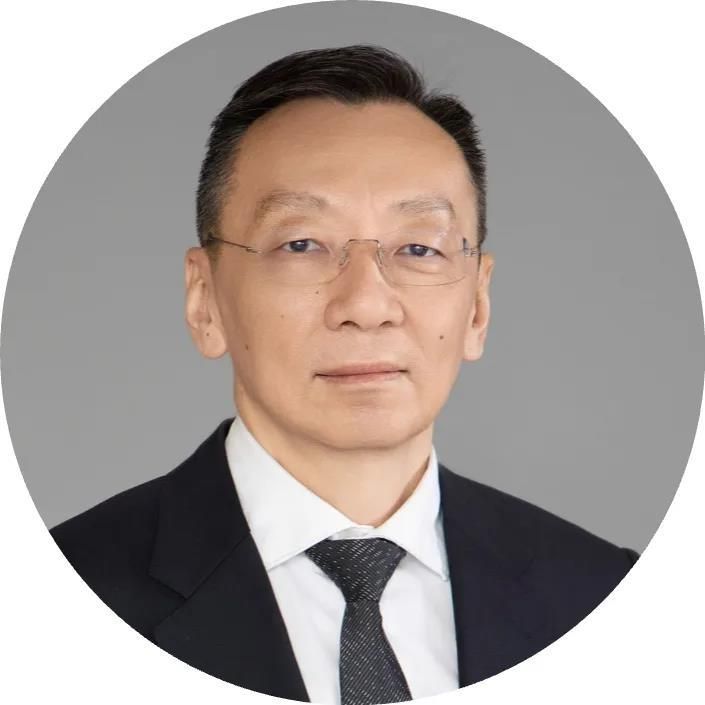
Dr. Wentao Fang
Shanghai East Hospital Affiliated to Tongji University
As an internationally renowned thoracic surgery expert, he possesses superb skills and rich experience in the surgical diagnosis and treatment of common chest diseases such as lung cancer, mediastinal tumors, esophageal diseases, as well as tracheal and chest wall diseases. He particularly excels in minimally invasive surgery such as thoracoscopic and robotic surgery for lung cancer, mediastinal tumors, and esophageal cancer, as well as multidisciplinary comprehensive treatment. He enjoys a high reputation in the precise diagnosis and treatment of small pulmonary nodules, comprehensive treatment of locally advanced lung cancer, and multidisciplinary comprehensive treatment of mediastinal tumors.