
Dr. Shi Yan: Iteration of Perioperative Treatment for Lung Cancer and Management Strategies for Ground-Glass Nodules | WCLC 2026
Dr. Shi Yan discusses the evolving landscape of perioperative lung cancer treatment, highlighting the role of liquid biomarkers in guiding personalized care and the latest strategies for managing ground-glass nodules.

Editor's Note: From September 12 to 15, 2026, the 2026 World Conference on Lung Cancer (WCLC 2026), hosted by the International Association for the Study of Lung Cancer (IASLC), was successfully held in Seoul, South Korea. FOCUS Clinical Scientists specially invited Dr. Shi Yan from Beijing Cancer Hospital to share in-depth insights, in light of the latest research advances at the conference, on topics including the iteration of perioperative treatment concepts for lung cancer, the application value and implementation challenges of liquid biomarkers in efficacy prediction and postoperative recurrence risk stratification, and the subtype-based management and timing of surgical intervention for ground-glass nodules.
FOCUS Clinical Scientists: Compared with previous years, what key iterations have occurred in the current concepts of perioperative treatment for lung cancer? What impact has the emergence of these research results had on traditional surgical clinical thinking?
Dr. Shi Yan: In perioperative treatment, we now place increasing emphasis on preoperative neoadjuvant therapy. Compared with previous years, the intensity and degree of participation in perioperative, especially preoperative neoadjuvant, treatment are continuously deepening. For example, a few years ago we mainly focused on preoperative neoadjuvant targeted therapy for EGFR mutations and the like, whereas now preoperative neoadjuvant therapy for fusion mutations has gradually emerged. Taking the ALK fusion mutation, with which we are relatively familiar, as an example, a large number of single-arm, single-center studies are currently underway and have already produced preliminary results.
This year's NAUTIKA1 study is an umbrella study. In addition to the known ALK locus, the G12C locus has also shown good pathological complete response (pCR) and major pathological response (MPR) results. This suggests that perioperative treatment is increasingly integrating into the multidisciplinary model, especially preoperative neoadjuvant therapy. Whether in patients previously considered to have sensitive gene mutations or in G12C, once regarded as an undruggable target, encouraging results can now be seen in both advanced lung cancer and preoperative neoadjuvant treatment. In this year's NAUTIKA1 study, patients with KRAS G12C mutations showed good MPR and pCR rates, with the pCR rate even reaching the teens, which was previously unimaginable to us.
Looking at current new drugs, the keynote speech today also introduced new drugs targeting ROS1. Once these drugs demonstrate strong antitumor activity and achieve good results in advanced tumors, they are very likely to gradually enter the perioperative treatment field. Similarly, taking taletrectinib for the ROS1 locus as an example, after achieving good results in first-line advanced treatment, it quickly entered global postoperative adjuvant therapy research. I believe that whether for ROS1 or other loci, once a good efficacy signal is obtained in first-line advanced research, it is very likely to be further advanced into clinical research for perioperative treatment.
FOCUS Clinical Scientists: With the widespread use of neoadjuvant immunotherapy, liquid biomarkers such as minimal residual disease (MRD), circulating tumor DNA (ctDNA), and methylation have attracted increasing attention, and multiple related datasets were released at this conference. What is the current practical application value of these biomarkers in predicting neoadjuvant efficacy and stratifying postoperative recurrence risk in lung cancer? What challenges remain in moving from existing research to routine clinical implementation?
Dr. Shi Yan: In perioperative treatment, whether preoperative neoadjuvant therapy or postoperative adjuvant therapy, we build on the foundation of clinical research. Taking postoperative adjuvant therapy as an example, we set the duration of adjuvant therapy, everyone follows it, and ultimately we observe differences in disease-free survival (DFS) or overall survival (OS). The ADAURA study reported in this year's conference keynote also achieved good results over 8 years of follow-up. Therefore, many scholars at the conference discussed "what to do next": against the backdrop of postoperative adjuvant therapy efficacy having been fully validated, the future focus may lie in how to precisely screen different populations and implement differentiated treatment, which includes shortening the duration of postoperative adjuvant therapy for patients with a better prognosis (for example, not necessarily continuing for three years), as well as appropriately extending treatment time for patients with a poorer prognosis. The key to all of this lies in how to identify these patients.
In this regard, many scholars at the conference mentioned auxiliary tools such as MRD testing. Currently, the application of MRD in research has shown very good signals; for example, it has a relatively long lead time and can predict possible adverse events in patients about half a year in advance. However, in clinical implementation, there are still some aspects that need to be improved before it can truly benefit all patients. The first is the issue of accessibility: at present, MRD is mostly still used for research, and how to make testing truly reach patients and be affordable for ordinary people is a realistic problem. Second, current MRD testing mostly only indicates an "adverse signal," but the question of what treatment modality should be adopted for such patients to achieve longer DFS has not yet been perfectly resolved. At present, it appears that for some patients with sensitive gene mutations, if the same locus is found to be positive in MRD testing, it may suggest that prior targeted therapy can cover such patients; however, for patients who relapse after immunotherapy, how to identify them with the help of MRD, whether prior drugs can cover their resistance loci, or whether new drugs are needed to give patients longer DFS, these are still directions that everyone is exploring.
Preoperative neoadjuvant therapy faces the same issue. We also hope to know in advance which patients will achieve good efficacy and which patients will not achieve the expected results under a given treatment regimen, and we hope even more to predict outcomes at the patient's baseline status. But this is currently difficult to achieve: whether methylation or ctDNA, most require patients to complete 1–2 cycles of treatment before signals can be seen, and identifying primary resistance at the initial stage is relatively difficult, requiring continued in-depth work at the mechanistic level.
In addition, currently, whether MRD or ctDNA, it often takes until the patient has completed medication and is approaching surgery to accurately predict pCR or MPR with a relatively high probability. But by that time, most drug treatment has ended, and surgery is already "an arrow on the bowstring." Of course, for a subset of patients at very high surgical risk, if pCR can be predicted in advance, surgery might be avoided in favor of other alternative treatment options; however, the proportion of such patients in clinical practice is not high. Exactly how many patients urgently need ctDNA or methylation testing to adjust their treatment mode is a question we need to pay further attention to in clinical practice.
FOCUS Clinical Scientists: In recent years, the number of people diagnosed with early-stage lung cancer ground-glass nodules has been increasing. In light of the surgical screening-related content at this conference, for different subtypes of ground-glass nodules, how should the timing of surgical intervention and surgical strategy be determined? How can we avoid overtreatment while not causing missed diagnosis or delay for high-risk patients?
Dr. Shi Yan: This issue is a very prominent one for East Asian populations. The proportion of ground-glass nodules is relatively higher in East Asian populations, especially in non-smoking women. We can see that, especially for pure ground-glass nodules, the prognosis is very good. Therefore, in many current guidelines, for indolent pure ground-glass nodules, both the timing and urgency of treatment are no longer as aggressive as before. Especially last year, we could see that multiple studies (mostly single-center studies) with 10-year follow-up results showed that if the patient's nodule does not show increased solid components, the final prognosis of surgery and long-term observation is the same. Multiple centers have reached similar results, suggesting that we should still adopt a relatively conservative management approach for pure ground-glass nodules at present.
However, for mixed ground-glass nodules, this may be the focus we need to pay attention to. This year, a great deal of research has focused on this, and everyone is mainly concerned with the following aspects: on the one hand, determining which mixed ground-glass nodules are high-risk through certain means (especially nodules accompanied by high-risk pathological factors or invasive factors), thereby suggesting that these patients need more targeted treatment strategy adjustments, and the extent of resection may need to be more aggressive than the original plan; on the other hand, related research is also exploring the mechanistic differences among different types of mixed ground-glass nodules. These explorations help us deepen our understanding of the mechanisms and biological behavior of mixed ground-glass nodules and are of great help.
Expert Profile
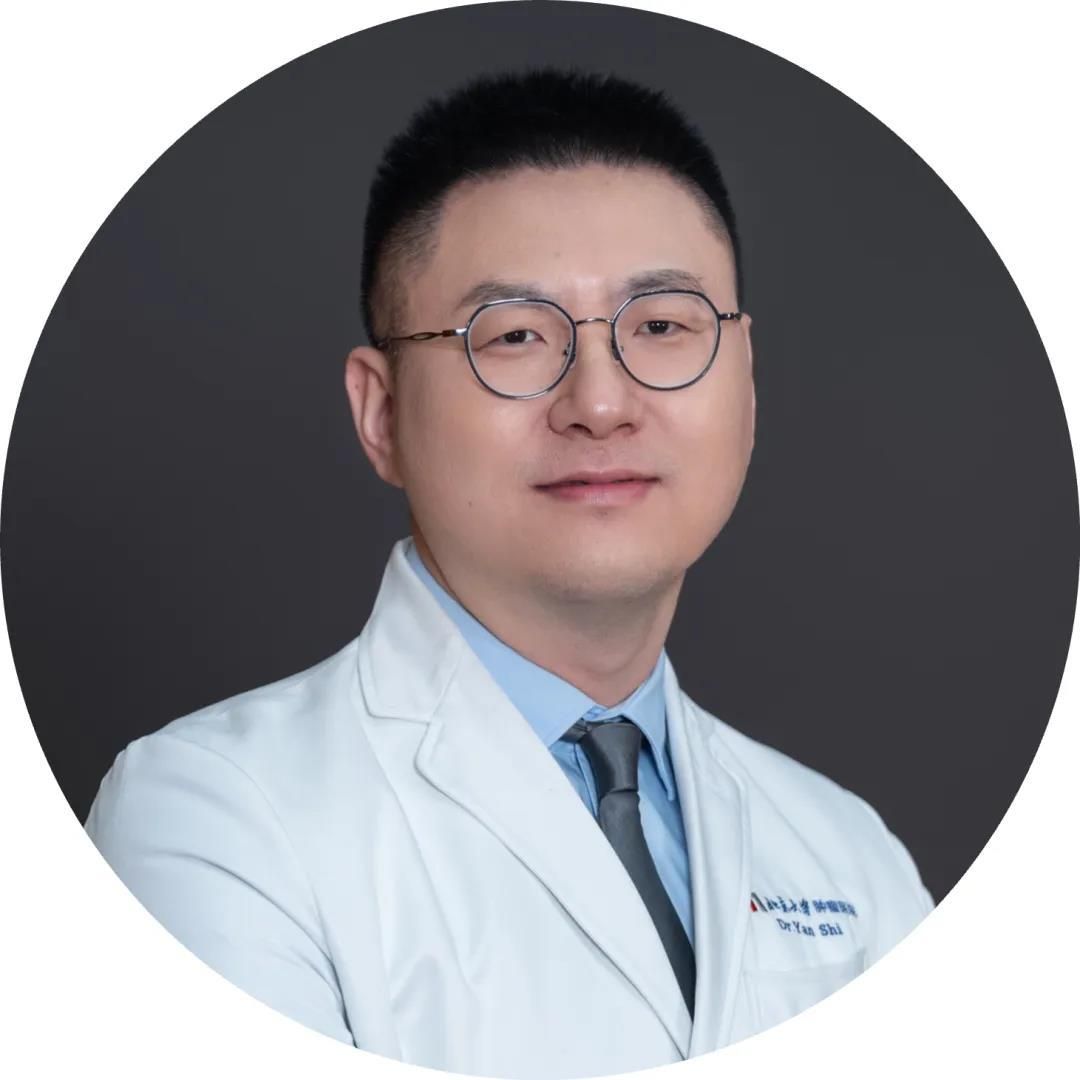
Dr. Shi Yan
Beijing Cancer Hospital
Areas of expertise: minimally invasive treatment of lung cancer, complex lung cancer resection, standardized treatment of pulmonary ground-glass nodules, minimally invasive three-incision surgery for esophageal cancer, minimally invasive two-incision surgery for esophageal cancer, and comprehensive perioperative treatment of chest tumors including targeted therapy, chemotherapy, and immunotherapy.