
China-French Dialogue Dr. Wenming Chen in Conversation with Dr. Mohamad Mohty From Target Innovation to Global Collaboration – Charting the Future of Immunotherapy in Myelom
At EHA2026, Dr. Mohamad Mohty and Dr. Wenming Chen discussed bispecific & trispecific antibodies, CAR-T therapy, and the future of myeloma treatment.
Editor's Note: At the 31st European Hematology Association (EHA) Annual Congress in 2026, FOCUS Clinical Scientists invited Dr. Mohamad Mohty, Member of the French Academy of Medicine, and Dr. Wenming Chen from Beijing Chaoyang Hospital, Capital Medical University, to engage in an in-depth dialogue on the future development model of immunotherapy in myeloma, China's role in the global myeloma innovation landscape, and directions for international scientific collaboration.
FOCUS Clinical Scientists: Bispecific antibodies have gradually moved from late-line to frontline treatment in myeloma, while trispecific antibodies are also beginning to emerge. In your view, what is the ideal future development model for myeloma immunotherapy—simultaneous multi-target coverage or sequential switching based on resistance mechanisms? Will the advent of trispecific antibodies fundamentally alter the current competitive landscape between bispecific antibodies and CAR-T cell therapy?
Dr. Mohamad Mohty: Immunotherapy represents the central focus in the current myeloma landscape, encompassing CAR-T cell therapy, bispecific antibodies, and the emerging trispecific antibodies. These therapies were initially developed for late-line refractory myeloma settings and are now progressively advancing to earlier lines of treatment. High-quality randomized controlled studies have already demonstrated that BCMA-targeted bispecific antibodies and BCMA-targeted CAR-T can be used in early relapsed patients. Additionally, BCMA-targeted antibody-drug conjugates (ADCs) constitute an important component of the immunotherapy armamentarium.
Immunotherapy has proven highly effective in early relapsed patients, and ongoing randomized studies are now exploring its move to the first-line setting—including CAR-T versus autologous stem cell transplantation, and bispecific antibody-based regimens versus transplant and non-transplant approaches. Immunotherapy is profoundly transforming treatment outcomes for myeloma patients.
Dr. Wenming Chen: Currently, both bispecific antibodies and CAR-T products are approved only for fourth-line and beyond late-line treatment. In recent years, international conferences such as ASH and EHA have presented an increasing body of clinical data, including studies such as MajesTEC-3, MajesTEC-9, and MONUMENTAL-3, exploring the efficacy of bispecific antibodies in second- to fourth-line treatment. Clinical studies evaluating bispecific antibodies in the first-line setting are still ongoing.
Preliminary results for trispecific antibodies have shown excellent performance, with overall response rates approaching 100%, though they remain in Phase I and II clinical trials. Going forward, it will be important to explore whether trispecific antibodies can replace the clinical value of bispecific antibodies.
Based on the current clinical trial landscape, trispecific antibodies are primarily positioned in later lines of treatment, whereas bispecific antibodies have broader applicability across treatment lines. Therefore, a possible future treatment paradigm would be: bispecific antibodies could still be applied in frontline treatment, while trispecific antibodies would be mainly reserved for second-line and subsequent treatment.
Dr. Mohamad Mohty, what are your thoughts on this strategy?
Dr. Mohamad Mohty: This is an important and reasonable perspective. From a mechanistic standpoint, bispecific antibodies simultaneously target CD3 and one tumor antigen, with available targets including BCMA, FcRH5, GPRC5D, CD38, among others; trispecific antibodies, on the other hand, can simultaneously target CD3 and two tumor antigens, such as BCMA combined with GPRC5D, or BCMA combined with CD38.
Studies have already shown that combining two bispecific antibodies targeting BCMA and GPRC5D demonstrates excellent efficacy in difficult-to-treat populations such as those with extramedullary disease, validating the clinical value of dual-antigen coverage. At this stage, a more rational deployment model would be to use single-target bispecific antibodies in the frontline setting, and dual-target-covering trispecific antibodies at the time of relapse; if future studies confirm that frontline use of trispecific antibodies can achieve short-term cure for patients, this would represent a revolutionary clinical breakthrough.
FOCUS Clinical Scientists: In recent years, China has continuously produced innovative achievements in the field of precision therapy and immunotherapy for myeloma. How do you view China's role in the global myeloma innovation landscape? In areas such as mechanism-driven clinical trials and novel immunotherapy target development, what are some promising directions for collaboration between Chinese and international medical communities?
Dr. Mohamad Mohty: I have maintained long-standing and in-depth exchanges with the Chinese hematology community. I have many friends and colleagues in China and visit frequently. China has produced a wealth of outstanding innovative achievements in the field of hematology, particularly in cellular therapy and CAR-T, where China is in a globally leading position in CAR-T research and development.
Many CAR-T products currently in clinical use in Europe and America originated in China. For example, ciltacabtagene autoleucel, which has already been approved, traces its origins to LCAR-B38M, which was developed in China—and there are many such examples. I believe these innovations will continue to emerge. Next-generation CAR-T products that the industry is currently focused on—for instance, the CD19/BCMA dual-target CAR-T currently being evaluated in prospective trials in Europe and America—also originated in China. Furthermore, multi-target CAR-T, armored CAR-T, and in vivo CAR-T have all been pioneered by Chinese researchers.
In summary, China's innovative achievements in the field of immunotherapy are truly remarkable, and the examples are too numerous to list. These innovations will ultimately benefit patients worldwide, which is a positive development for the entire field.
Expert Profiles

Dr. Wenming Chen
Beijing Chaoyang Hospital, Capital Medical University
His primary research focus is on the basic science and clinical management of multiple myeloma. He has conducted research on early diagnosis and treatment of multiple myeloma, including chemotherapy, hematopoietic stem cell transplantation, immunotherapy, anti-angiogenesis therapy, and bone disease management.
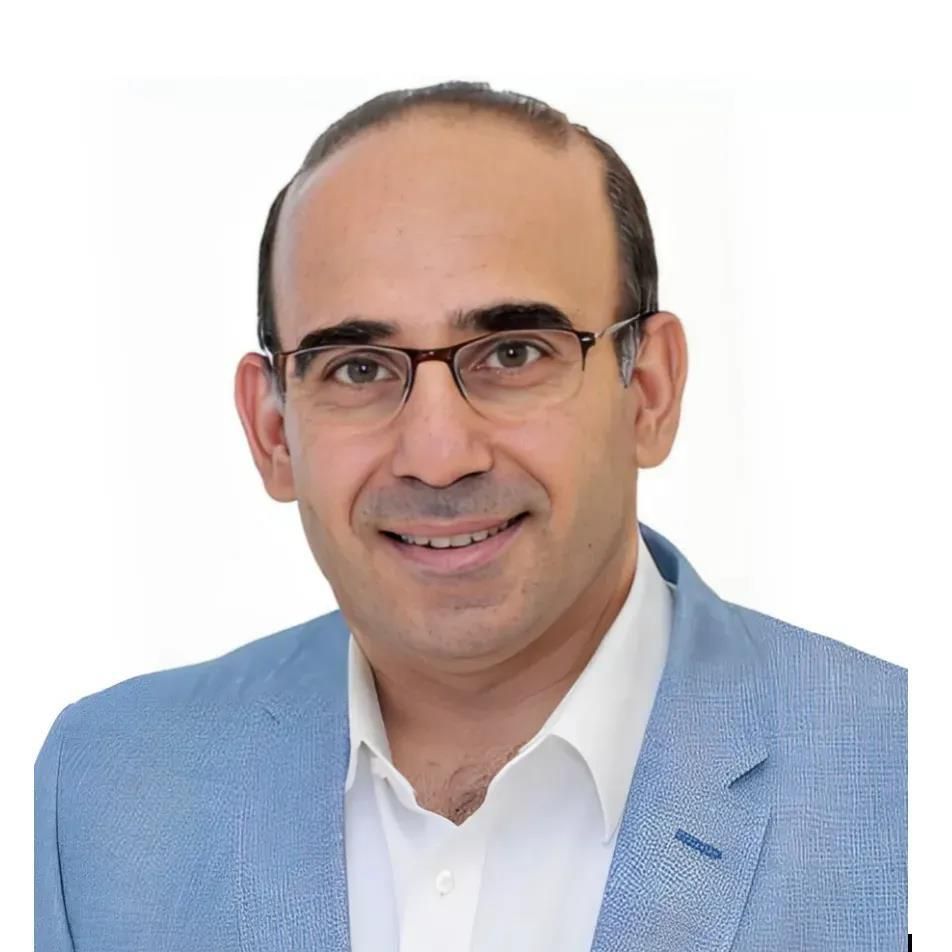
Dr. Mohamad Mohty
Hôpital Saint-Antoine and Sorbonne University, Paris, France
He has published over 1,000 peer-reviewed articles in the fields of stem cell transplantation, leukemia, and myeloma, and serves as Editor-in-Chief of Bone Marrow Transplantation and Clinical Hematology International.