
Dr. Ming Hou on the Updated Adult ITP Guidelines: Chinese Data, Localized Strategies, and Future Directions
Dr. Ming Hou discusses updated diagnostic strategies, individualized treatment for relapsed/refractory ITP, and the growing role of Chinese clinical evidence.
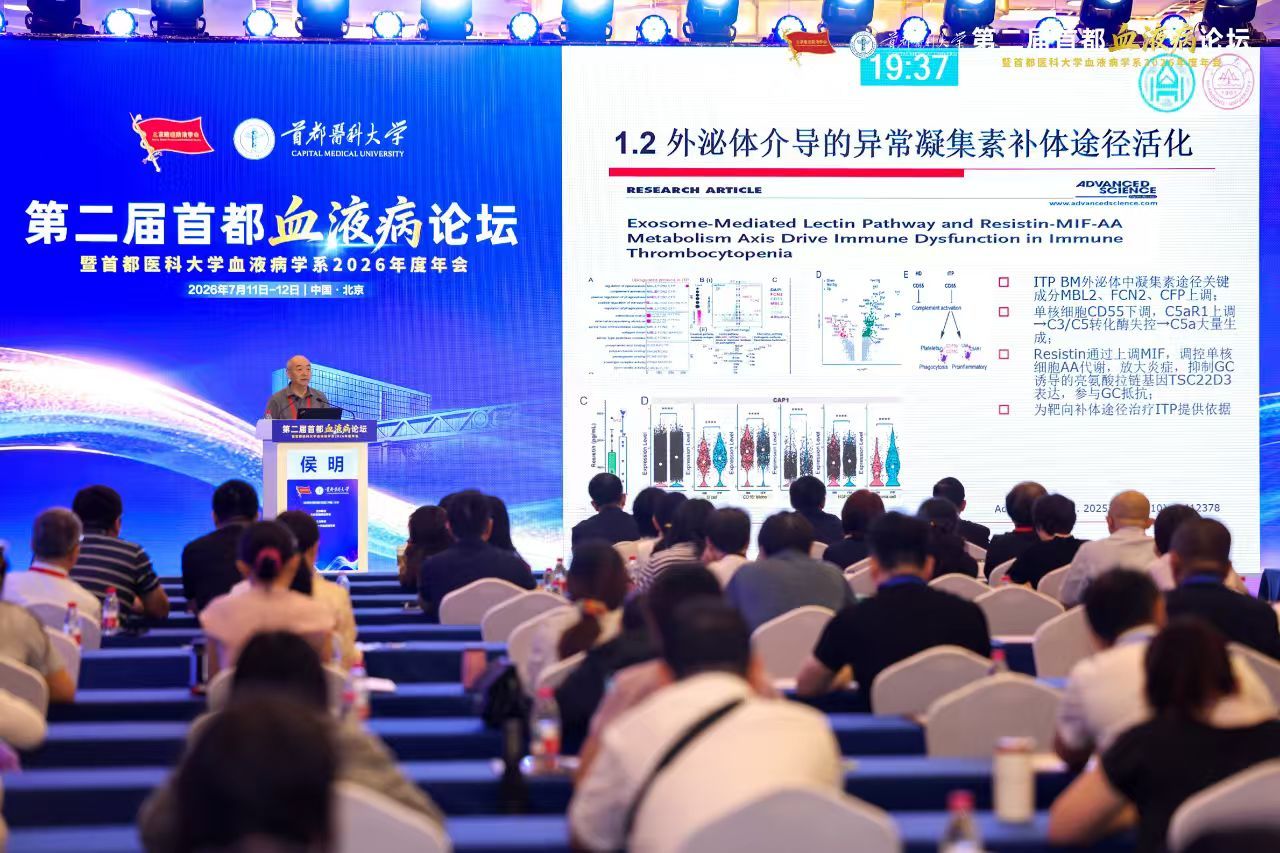
Editor's Note: During the 2nd Capital Hematology Forum and the 2026 Annual Meeting of the Capital Medical University Department of Hematology, Dr. Ming Hou from Qilu Hospital of Shandong University, spoke with FOCUS Clinical Scientists to offer an in-depth interpretation of the key revisions in the 2025 guidelines for adult primary immune thrombocytopenia (ITP).

FOCUS Clinical Scientists: What are the key changes in the 2025 adult ITP guidelines compared with the previous edition, and what new stratified treatment recommendations have been introduced for refractory and relapsed ITP patients in clinical practice?
Dr. Ming Hou: Our team has carried out extensive, rigorous work in epidemiology, pathogenesis, diagnosis, and treatment, and we have incorporated all of these findings into the new guidelines. We hope this will mark a shift from merely keeping pace to taking the lead in certain areas. It is worth noting that the ASH guidelines and the ITP International Working Group consensus are also being updated.
The core of this update spans several areas. In epidemiology and pathogenesis, for the first time we have drawn upon large-scale domestic survey data from regions including Yunnan, Gansu, and Taiwan. The results show that our data are broadly comparable to international figures yet carry stronger local relevance. We have also added the mechanism of complement pathway–mediated platelet destruction, based on work by the team at the First Affiliated Hospital of Zhengzhou University published in Advanced Science. Phase I and II trials of complement inhibitors for ITP are already underway overseas, with encouraging preliminary results, suggesting that blocking the complement pathway may help resolve some ITP cases.
On the diagnostic front, we have refined the scope of antiphospholipid syndrome (APS) antibody screening. Thrombocytopenia associated with APS differs from ITP in that it carries not only bleeding risk but also a high thrombotic risk. Therefore, the new guidelines repeatedly stress the importance of ITP comorbidities, especially when thrombosis or high thrombotic risk is present. In addition, we have introduced special tests such as next-generation sequencing, whole-exome sequencing, and immature platelet fraction, while retaining the anti-glycoprotein (anti-GP) specific autoantibody and serum thrombopoietin (TPO) assays from the previous edition. These tests are not meant for initial screening; rather, they are reserved for situations where treatment fails, splenectomy is being considered and rediagnosis is required, or the clinical picture is atypical, to rule out non-immune thrombocytopenia or bone marrow failure disorders such as atypical aplastic anemia and hypoplastic myelodysplastic neoplasms (MDS).
In treatment, we have added thrombopoietic agents and rituximab as later-line options to broaden patient choice. We have also proposed a so-called "1.5-line" regimen of high-dose dexamethasone combined with another agent. Specifically, if response is lost after an initial course of dexamethasone monotherapy, a second course adds another drug for up to three months—options include recombinant human thrombopoietin (rhTPO), thrombopoietin receptor agonists (TPO-RA), rituximab, mycophenolate mofetil, all-trans retinoic acid, oseltamivir, and caffeic acid, among others. Compared with dexamethasone alone, this combination raises the six-month sustained remission rate by 20%–30%, allowing roughly half of patients to achieve sustained remission at six months. This level of efficacy is on par with that of most current novel or investigational agents—such as BTK inhibitors, SYK inhibitors, FcRn antagonists, BAFF antagonists, anti-CD38 monoclonal antibodies, and CAR-T—none of which exceed a 50% sustained remission rate.
For refractory ITP, the new guidelines include all approved second-line and beyond agents as treatment options, while actively encouraging enrollment in Phase II and III registration trials. Many of these drugs have been on the market for years in other indications; their use in ITP is an extension of established applications. Patients should not decline participation out of conservatism. Chinese patients are generally cautious about clinical trials, and even those with limited means are often unwilling to enroll—a mindset that needs to change.
FOCUS Clinical Scientists: The choice among immunosuppressants, TPO-RA, and novel monoclonal antibodies in ITP remains controversial. How did you balance the target populations and safety profiles of these different agents when drafting the guidelines?
Dr. Ming Hou: For elderly patients, especially those harboring high-frequency MDS-related gene mutations whose morphology does not support a diagnosis of MDS, we recommend ultra-low-dose decitabine. The 3.5 mg regimen we use has shown good efficacy and an acceptable safety profile. For patients with concurrent thrombosis, we advise avoiding TPO and TPO-RA agents whenever possible. For postmenopausal elderly women whose platelet count hovers around 20×10⁹/L without significant bleeding tendency, we recommend danazol plus all-trans retinoic acid. In patients with active infection or advanced malignancy, immunosuppressants should be avoided if at all possible.
FOCUS Clinical Scientists: The misdiagnosis rate of ITP in primary-level hospitals is rather high, and many patients first present to other departments with bleeding symptoms. How do you think hematology departments should work with general practice and emergency medicine to build a rapid differential diagnosis pathway?
Dr. Ming Hou: The most basic step in differentiating thrombocytopenia from ITP is to review the peripheral blood smear. This simple procedure can help rule out a large number of non-ITP causes of thrombocytopenia. For instance, in congenital hereditary thrombocytopenia, the morphology of platelets, as well as red blood cells and granulocytes, may appear abnormal, and without a blood smear, it would be impossible to differentiate. Additionally, pseudothrombocytopenia can be identified through blood smear examination combined with changing the anticoagulant. As for leukemia, MDS, and other diseases with morphological changes, they can also be identified through this straightforward test. However, given the heavy clinical workload, it is challenging to have laboratory physicians perform morphological review for every patient with thrombocytopenia. Nevertheless, if this step can be implemented, it would rule out the majority of non-ITP cases, and we therefore encourage its use whenever conditions permit.
Expert Profile

Dr. Ming Hou
Qilu Hospital of Shandong University
Dr. Hou specializes in platelet immunology and is proficient in the diagnosis and treatment of platelet disorders, lymphoma, and leukemia.